SharePoint Online
What is SharePoint Online?
Microsoft SharePoint Online is a collection of cloud- and web-based technologies that make it easy for organizations to store, share and manage digital information.
SharePoint Online is divided into three hubs: Newsfeed, OneDrive and Sites. A new microblogging feature lets users engage in conversations, "like" posts, include pictures, videos and documents, and mention other users in the Newsfeed. SharePoint Sites can be easily customized or configured for mobile devices.
SharePoint Online also supports collaboration with external users such as vendors and customers. It is available as a standalone product and as part of an Office 365 suite that includes Exchange Online, Skype for Business, Office clients and Office Web Apps.
Why do businesses use SharePoint Online?
Microsoft SharePoint Online provides these primary features and benefits:
- Document management and collaboration tools. Document libraries can be created to store documents. They let users collaborate on documents in real time. SharePoint Online provides task lists, calendars and team sites that help employees communicate and collaborate.
- Application integration. SharePoint Online integrates with other Microsoft Office 365 applications such as Outlook and Yammer. By combining apps, businesses can improve a team's productivity and reduce IT costs.
- Easy collaboration. The integrated applications and features make it easy for employees to collaborate on documents. Cloud-based document management ensures that data is accessible from anywhere.
- Subscription pricing. Businesses only pay for the licenses they need.
- Multifunctionality. Besides simplifying document management and facilitating collaboration, SharePoint Online can serve as a company intranet providing announcements and updates on company information.
- Security. SharePoint has advanced security features designed to prevent unauthorized access to sensitive information.
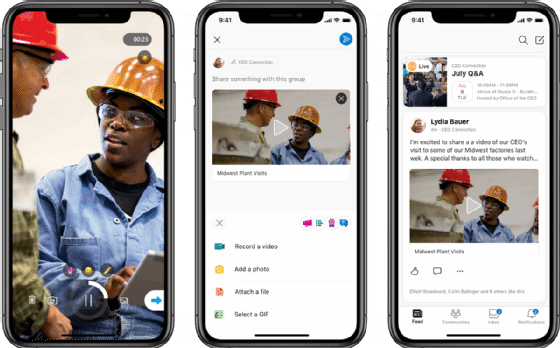
- Mobile capabilities. Field and remote workers can access SharePoint on mobile devices and use it for mobile applications.
SharePoint Online vs. SharePoint on premises
The main difference between SharePoint Online and SharePoint on premises involves where the software is hosted.
SharePoint Online
SharePoint Online is cloud-based software as a service. Users can store and share information and use it collaboratively. Microsoft hosts the software on its own servers. Businesses buy the software using a subscription model.
The benefits of SharePoint Online align with benefits of cloud-based services in general. They include the following:
- The business is not responsible for hosting the software.
- It has flexibility regarding ownership of the software.
- It can cancel the subscription when it wants to.
- Microsoft manages data backups and software patches and the workflow around those processes.
The downside of the online offering is that the business has less control over its data, data security and the underlying hardware that hosts it.
On-premises SharePoint
With SharePoint on premises, sometimes referred to as SharePoint Server, the user organization is the host, using its own servers. Organizations pay for a software license to own a copy of the software, which they host and access at will. The on-premises version of SharePoint requires users to buy dedicated, on-site hardware.
Among the benefits of the on-premises option are the following:
- Because the business hosts the software, it has more control over the hosting hardware and its own data.
- The hosting business is in control of the servers, architecture and other resources necessary for software maintenance.
However, an organization using on-premises SharePoint is also in charge of backing up its own data. Depending on the business, the on-premises option may be more expensive than the online one. Expanding the number of users for on-premises SharePoint can be a challenge because it requires manually expanding infrastructure to accommodate more users.
SharePoint Online pricing and plans
Microsoft offers three ways to subscribe to SharePoint Online. Each pricing plan is an annual subscription that is billed monthly and automatically renews.
- Plan 1 targets small to medium-sized businesses. It costs $5 per user, per month. It includes SharePoint, OneDrive, Microsoft Lists and 1 terabyte of storage per user.
- Plan 2 is intended for enterprises. It costs $10 per user, per month. It includes the same services as Plan 1 plus unlimited personal cloud storage, advanced data loss prevention capabilities and features that protect content from deletion and editing.
- Office 365 E3 is an Office 365 subscription that includes SharePoint Online. It costs $23 per user, per month and comes with advanced services for messaging, document sharing, compliance and IT asset management. It includes Microsoft Office applications like Excel and PowerPoint and additional services like Exchange, Skype for Business, Yammer and Microsoft Teams. It also offers custom email domains, unlimited storage and no limit on the number of users. This option includes a free 30-day trial.
SharePoint is a useful tool for team collaboration. Learn the basics of team collaboration in the enterprise, as well as some top enterprise team collaboration platforms.